 THE TRAINING BLUEPRINT SERIES / 04
VOLUME 04 / STRENGTH + MUSCLE
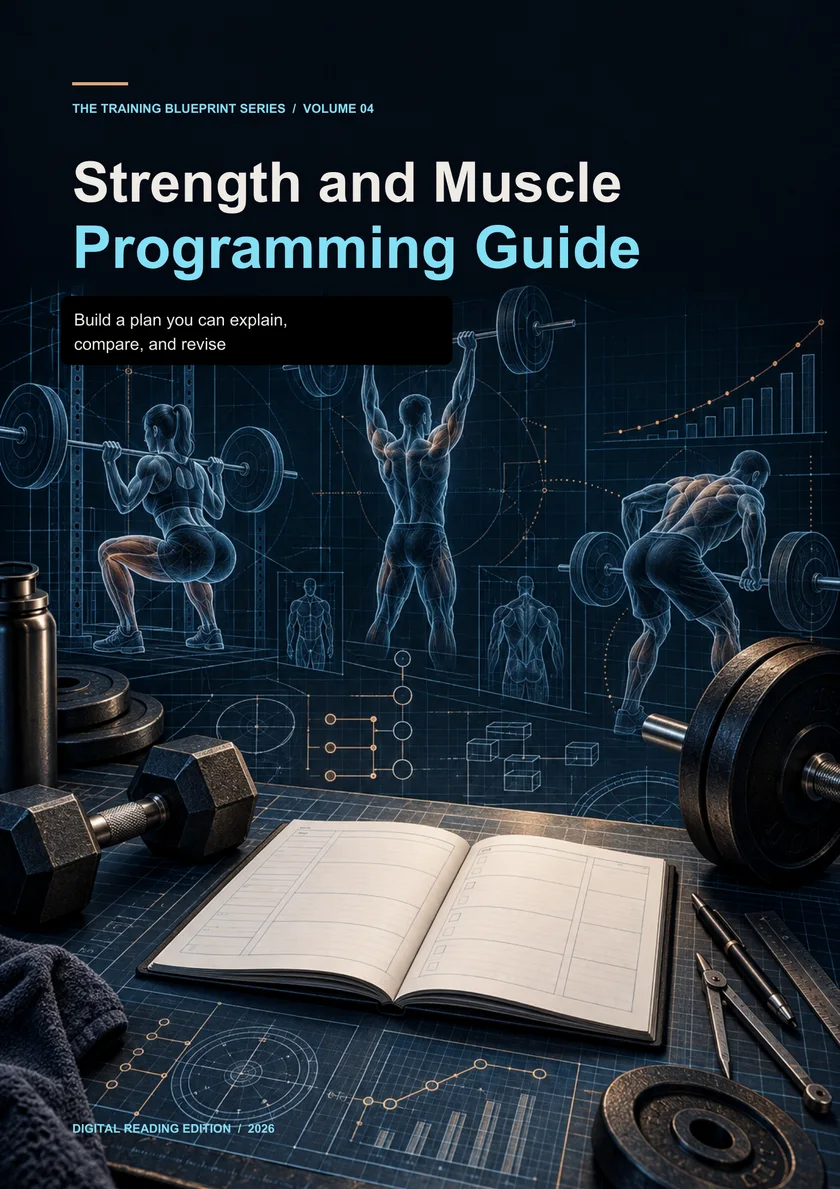
Strength and Muscle
Programming
Guide.
Build a plan you can explain,
compare, and revise.
An illustrated guide to the decisions behind a training plan: priorities, exercise choices, workload, progression, and review.
Purchase links will appear here when the retailer listings are available.
Explore what’s insideINSIDE THE VOLUME
From a template
to a way of thinking.
For adult recreational trainees who want to understand the choices behind their strength and muscle training.
Start with the decisions.
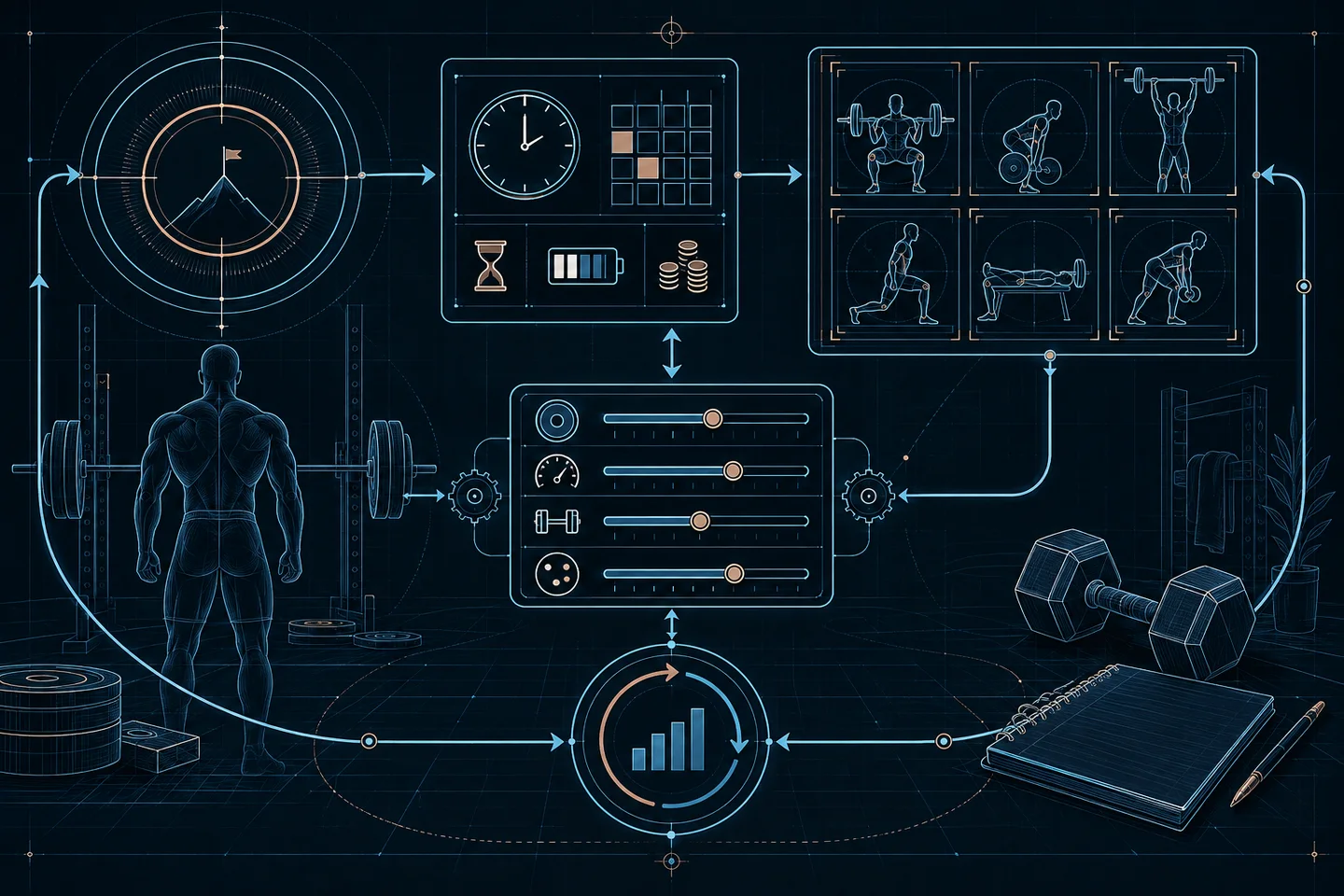
Connect goals and constraints to movement choices, training variables, and a clear review question.
Work through the examples.
Compare illustrative two-, three-, and four-session structures. See how time and equipment change the conversation.
Make your reasoning visible.
Use exercise cards, fictional planning conversations, and a one-page audit to examine the structure of a plan.
THE CONTENTS
Open the blueprint.
View the complete table of contents
- Start with the question, not a template
- Two outcomes, several measures
- The planning grammar
- Map the time you actually have
- Choose movement slots
- Count work without worshipping a number
- Distribute work across sessions
- Select load for the outcome
- Reps and effort are not the same thing
- Rest and sequence are part of the plan
- Progression is a decision rule
- Keep comparisons fair
- A plateau is a question
- Review without diagnosis
- Fatigue and lighter periods
- Plan phases without jargon
- An illustrative two-session skeleton
- An illustrative three-session skeleton
- An illustrative four-session skeleton
- A worked example with actual numbers
- Write an exercise card before changing the plan
- A mixed training week
- When equipment changes
- Three fictional planning conversations
- A one-page design audit
- Frequently asked questions
- Evidence notes and limitations
- Closing: a plan you can explain
- References
Formats and editions
The prepared digital edition includes an illustrated PDF and an offline HTML reading edition. Retailer editions may differ; check the format and files included on the listing before purchasing.
Who is this guide for?
Adult recreational trainees interested in understanding training decisions. Worked examples are educational illustrations, not individual exercise prescriptions or medical care.
START READING
The first step
is a better question.
Explore the five-question framework in a free article adapted from this volume.
Read the article